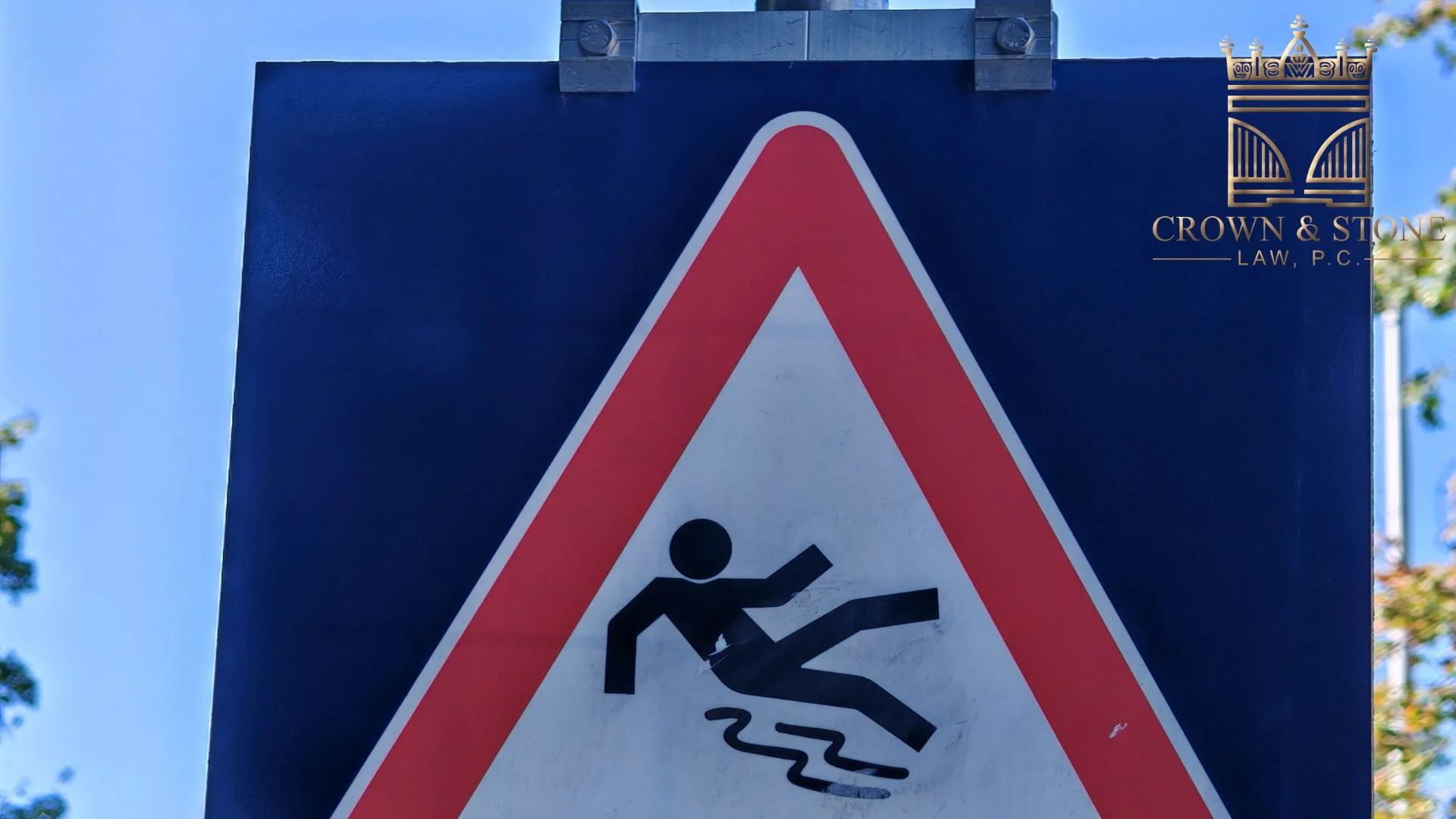
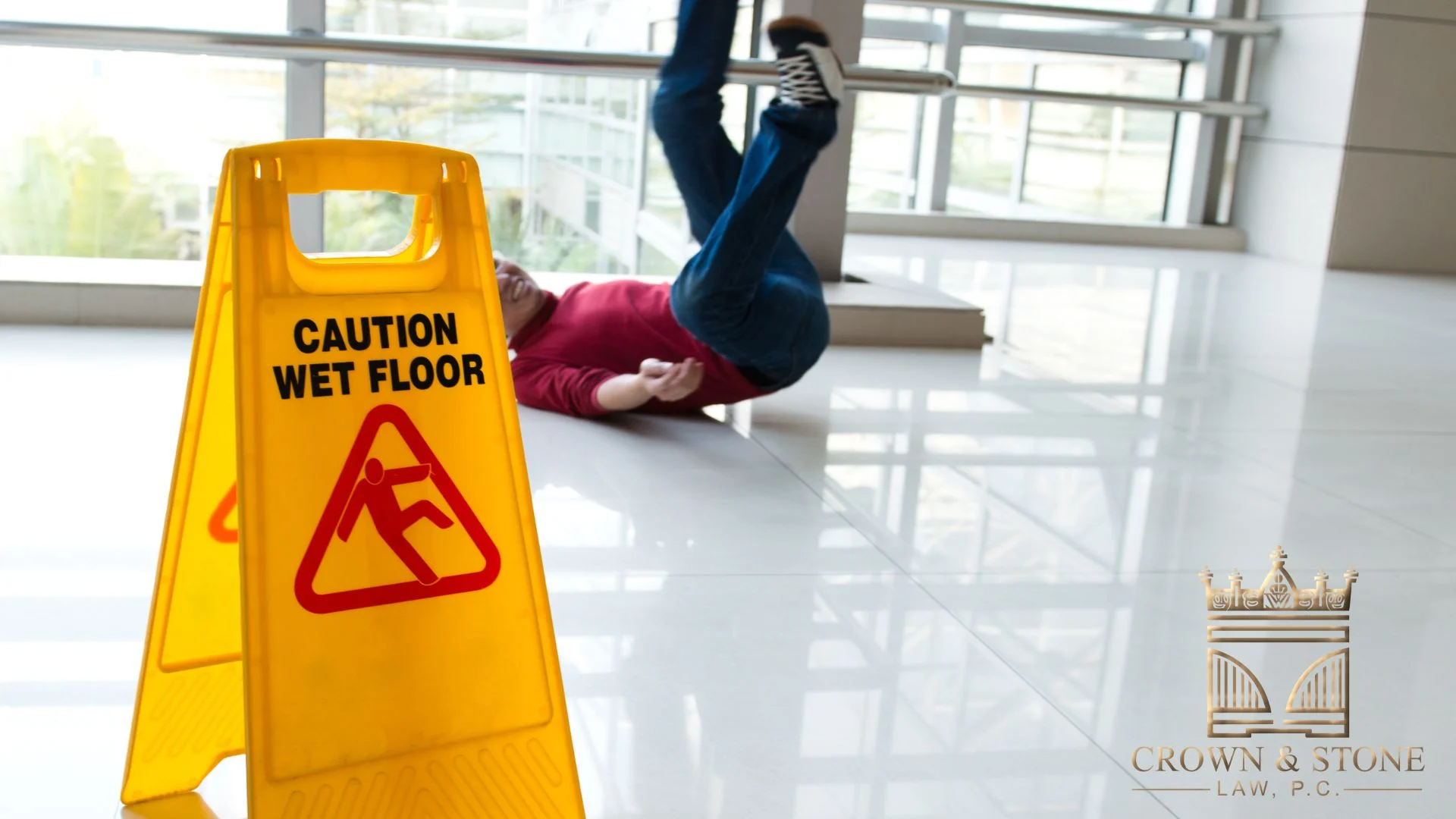
The moment happens in a split second. One moment you are walking through a grocery store aisle or a sidewalk, and the next, you are on the ground, dealing with a rush of pain, confusion, and perhaps embarrassment.
But once the initial shock wears off, a more pressing reality sets in. The medical bills begin to arrive, your ability to work is compromised, and you are left wondering if this “accident” was actually preventable.
At Crown & Stone Law, P.C., we understand that a fall is rarely just a fall. It is often the result of property owner negligence, which is a failure to maintain the safety standards you are owed under California law.
As you evaluate your next steps, you need a strategic understanding of how premises liability claims are built, valued, and won.
Key Takeaways
- Slip and fall injuries are common and costly in California, so it’s worth assessing whether unsafe property conditions caused your fall.
- A strong premises liability claim depends on proving the owner created the hazard, knew about it, or should have known about it through reasonable inspections.
- Fast evidence collection (especially surveillance video and documentation) can reduce disputes, strengthen leverage, and help prevent insurers from undervaluing your case.
Understanding Slip and Fall Accidents
It is common for victims to blame their own clumsiness after a fall. However, the data suggests a systemic issue rather than personal failure. In California, slip and fall accidents account for over 25% of all reported injuries, leading to more than 200,000 emergency room visits annually.
These aren’t minor incidents. The average hospital cost for a significant slip and fall injury can exceed $30,000. A figure that doesn’t even account for lost wages or long-term rehabilitation.
When you consider that falls are the leading cause of workers’ compensation claims in the state, it becomes clear that unsafe property conditions are a public safety crisis.
Proving Premises Liability
To move from an injured victim to a successful plaintiff, we must bridge the gap between “getting hurt” and “proving negligence.” In California, this falls under the legal concept of Premises Liability.
Property owners, whether they are retail giants, apartment complex managers, or municipal entities, have a legal “duty of care” to keep their property reasonably safe. When they fail, they are liable.
However, winning these cases requires proving one of three things regarding the hazard that caused your fall:
- They Created It: An employee mopped the floor and didn’t place a sign, or a construction crew left debris in a walkway.
- They Knew About It (Actual Notice): A customer reported a spill an hour ago, but management ignored it.
- They Should Have Known (Constructive Notice): This is where professional litigation shines. If a hazard (like a leaking freezer) existed long enough that a “reasonable” owner would have discovered it during routine inspections, they are liable—even if they claim ignorance.
Modern Evidence Gathering
The days of “he said, she said” are fading. At Crown & Stone Law, we leverage modern technology to dismantle the defenses of negligent property owners.
In the past, a supermarket might claim a spill happened seconds before you fell. Today, we look for video surveillance. Securing footage is time-sensitive, but critical. Data shows that clear video evidence can increase settlement offers by 40% to 60% by removing ambiguity.
Under the new 2025 California law, insurance carriers are now required to disclose policy limits within 20 days of a written request. This transparency allows us to accurately assess the potential value of your case much earlier in the process, preventing insurance adjusters from low-balling you based on hidden information.
3 Common Hazards
We have successfully litigated cases stemming from a wide variety of negligence. The nature of the accident often dictates the strategy we employ.
1. Wet and Slippery Surfaces
Common in grocery stores and restaurants. These cases often hinge on sweep logs and cleaning protocols. If a store cannot prove they inspected the aisle recently, their defense crumbles.
2. Uneven Surfaces and Broken Pavement
Trip and fall accidents on cracked sidewalks or unlevel flooring are notoriously dangerous. These often lead to spinal cord injuries or severe joint damage. In these cases, we often bring in professionals to measure the “coefficient of friction” and surface deviation to prove code violations.
3. Poor Lighting and Hidden Hazards
A step that is invisible in the dark is just as dangerous as a wet floor. Inadequate lighting in stairwells or parking lots is a frequent cause of brain injuries, particularly traumatic brain injuries (TBIs) resulting from the head striking the ground.
Is Your Case Viable?
As you compare law firms and consider your options, you should look for a legal partner who evaluates your case based on the “Four D’s” of negligence. This is the process we use to make sure we are building a winning strategy:
- Duty: Did the owner owe you a duty of safety? (Almost always “Yes” for customers and guests).
- Dereliction: Did they breach that duty through action or inaction?
- Direct Cause: Did that specific breach cause your fall?
- Damages: Are there verifiable financial and physical costs?
If these four elements are present, you likely have a strong claim for compensation.
Your Path to Recovery
Dealing with a premises liability claim requires an advocate who can tell your story through evidence, law, and persistence. If you are dealing with a corporation’s legal team or an aggressive insurance adjuster, you deserve a partner who views your recovery as their priority.
You have already endured the pain of the fall. You should not have to endure the financial burden of someone else’s negligence. Let us review the facts of your case, secure the necessary evidence, and build a strategy to make you whole.
Contact Crown & Stone Law, P.C. today for a free, confidential case evaluation.