

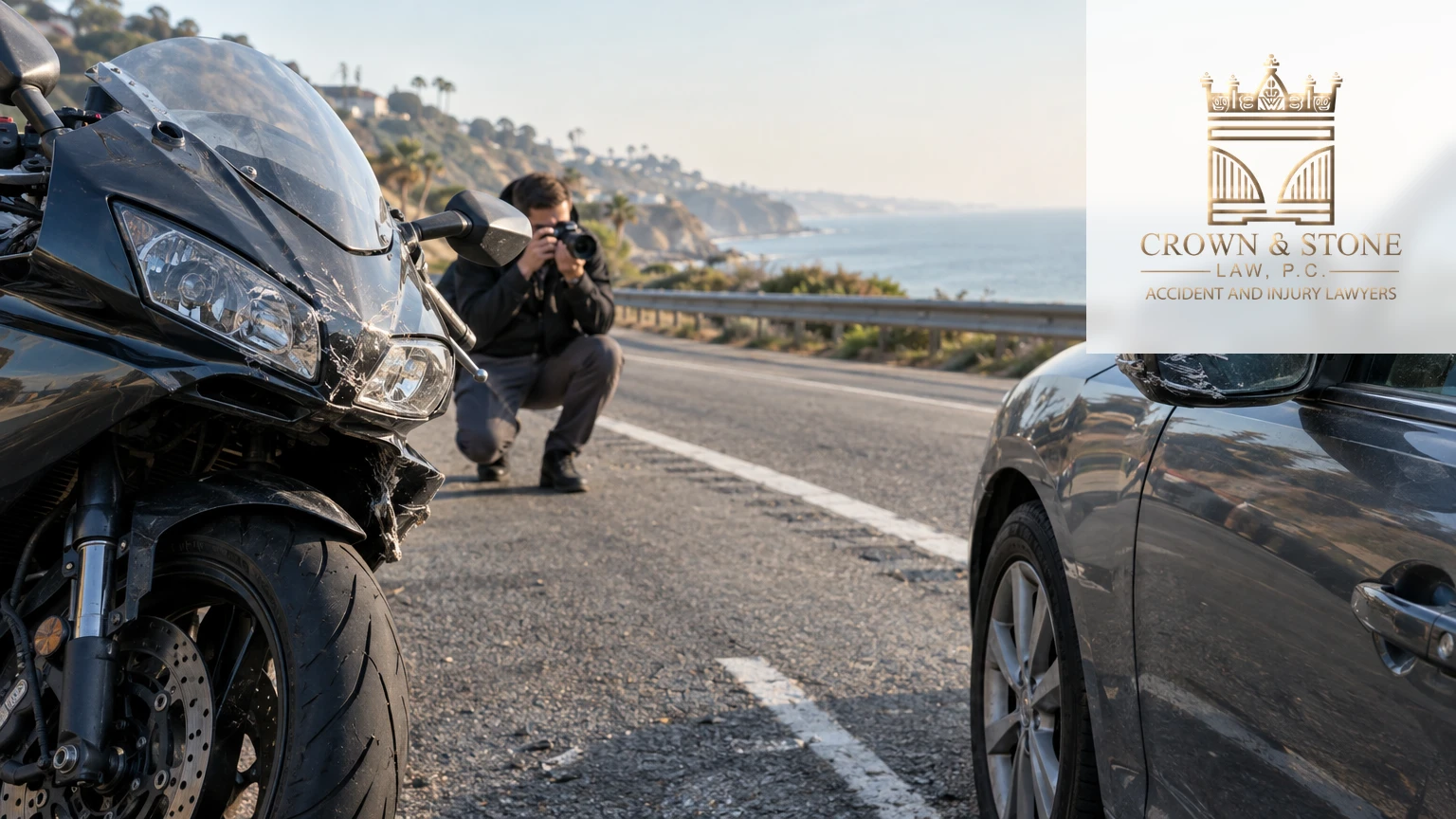
Crown & Stone Law, P.C. represents clients throughout California injured while lane splitting when a car makes an automated lane change into their path. The California Highway Patrol states that lane splitting is legal, but that does not settle who caused a particular crash.
NHTSA says drivers using Level 2 driver assistance must remain engaged and responsible for driving. We focus on preserving evidence and explaining what it proves, because a driver’s claim that the car moved itself is not proof that automation caused the collision.
What Should A Lawyer Preserve Before The Car’s Automated Lane-Change Data Disappears?
An early evidence review should identify the vehicle, its owner, available video, and any stored driving-system records, then address preservation with the parties holding them. NHTSA’s event data recorder guidance describes crash measurements such as speed and braking, but does not promise a record showing whether automated lane changing was active.
Separate system logs or manufacturer-held records may require different requests, if they exist. A preservation letter puts the recipient on notice, but it does not retrieve the data or stop every overwrite.
Can I Recover Damages If I Was Lane Splitting When The Car Moved Into Me?
Lane splitting alone does not bar a California injury claim. CHP identifies the practice as legal, while California Vehicle Code section 21658(a) requires lane movements to be reasonably safe. The Judicial Council’s CACI No. 405 explains that your share of fault reduces your damages rather than automatically defeating the claim. Speed, visibility, spacing, and the car’s movement still need evidence in claims involving unsafe lane changes.
How Can A Lawyer Prove Automated Lane Changing Was Active When The Driver Denies It?
Start with the exact vehicle model, installed equipment, and software version, then compare available records with video, witness accounts, and the driver’s statements. NHTSA distinguishes driver assistance from automated driving systems, so the feature’s actual function matters more than its marketing name.
Having an automated lane-change option does not prove it was switched on during your crash. If electronic records are missing, the case may still turn on whether the driver moved into your path unsafely.
Do I Sue The Driver Or The Manufacturer If Automated Lane Changing Hit My Motorcycle?
A driver claim and a product claim require different proof. NHTSA states that Level 2 systems still require driver supervision, while the Judicial Council’s CACI product-liability instructions require proof supporting a claimed defect and its role in causing harm. Naming a manufacturer without supporting evidence can add expense and delay without strengthening the claim.
What Should My Fee Agreement Say About Retrieving Vehicle Data After A Lane-Splitting Crash?
Ask the agreement to state who pays to request, download, and analyze vehicle data, and whether those costs are advanced by the firm and repaid from any recovery. It should also say whether an outside data or crash reconstruction expert may be hired and who approves that expense. Data retrieval is not guaranteed, so the agreement should not treat a records request as a promise that useful data exists.
What Happens Next If The Insurer Blames My Lane Splitting And Refuses To Pay?
The next step is to compare the insurer’s position with the physical evidence, available vehicle records, and medical documentation before deciding whether to file suit. California Code of Civil Procedure section 335.1 generally allows two years for an injury lawsuit, though exceptions can change that deadline.
California Government Code section 911.2 generally requires an injury claim against a public entity within six months. Those filing periods are not safe waiting periods for evidence, and settlement talks should not be assumed to extend them.
How Crown & Stone Law, P.C. Investigates Lane-Splitting Automation Claims In California
From our Beverly Hills office, we handle California injury claims with direct access to the attorney responsible for your matter, including questions about vehicle records and disputed crash mechanics. Clients describe plain explanations and responsive communication, and our 24/7 availability gives injured riders a way to raise concerns outside office hours.
BBB lists us as an accredited business with an A+ rating. We prepare cases for litigation, but we do not treat every alleged automated lane change as a product defect: the evidence must support that claim.
If a car moved into your path while you were lane splitting, contact us to schedule a consultation. The sooner we can request vehicle records and video, the more evidence is likely to still be available.