

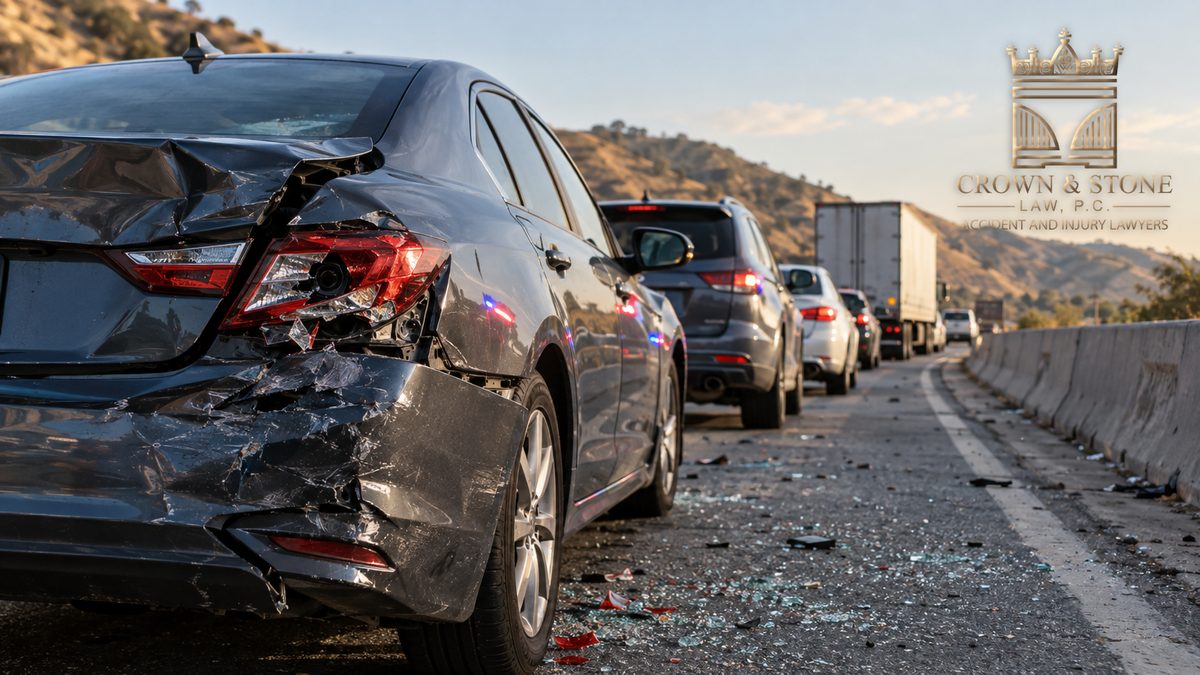
A semi hits the back of a stopped traffic queue, and your car becomes part of a crash you could not avoid. This service represents injured occupants by tracing the impacts, identifying responsible parties, and pursuing claims for their injuries. Crown & Stone Law, P.C. represents clients throughout California with direct attorney access and close attention to how each collision happened. California Vehicle Code section 22350 prohibits speed that is unsafe for traffic and road conditions – so driving below the posted limit does not settle the fault question.
How soon should a lawyer request truck records after a semi hits stopped traffic?
Evidence preservation should not wait for insurers to agree about fault. Under the Federal Motor Carrier Safety Administration’s 49 CFR section 395.8, carriers generally must retain drivers’ duty-status records for six months; that rule does not set the retention period for every camera or electronic record. Counsel can send preservation demands covering truck data, dashcam footage, dispatch messages, and the vehicles themselves. A preservation letter puts the recipient on notice, but it does not recover footage already overwritten.
Am I at fault if the semi pushed my stopped car into the vehicle ahead?
Contact with the car ahead does not, by itself, establish that you drove carelessly. The Judicial Council of California’s CACI No. 400 requires proof of negligence, harm, and a causal connection; CACI No. 406 addresses allocating responsibility among multiple responsible parties. The question is whether your actions contributed to the crash or whether the truck’s impact forced you forward. That distinction matters in claims involving rear-end impacts, where vehicle position alone can tell an incomplete story.
What evidence helps separate the first truck impact from later hits in a stopped queue?
A reconstruction may compare front and rear crush damage, photographs, witness accounts, video, and available truck data to test the impact order. California Highway Patrol’s Traffic Collision Report Manual provides a framework for documenting collision evidence, but a report may leave disputed impact sequences unresolved. Truck records matter too: FMCSA’s 49 CFR section 396.3 requires covered carriers to maintain vehicle inspection, repair, and maintenance records. A brake-maintenance entry is evidence to examine, not automatic proof that brake failure caused this crash.
What should a fee agreement cover before I hire a lawyer for a truck pileup injury?
For contingency arrangements covered by California Business and Professions Code section 6147, the written agreement must explain compensation and how case costs affect the client’s recovery. In a stopped-traffic pileup, ask how reconstruction work, truck inspections, medical records, and litigation expenses would be handled. Also ask what happens to costs if there is no recovery. The fee rate alone does not answer what you could owe.
Can other injured drivers use up the truck’s insurance before my claim is resolved?
Multiple injured occupants can make claims against the same liability policy, so the applicable limits deserve early attention. FMCSA’s 49 CFR section 387.9 sets minimum financial responsibility requirements for covered motor carriers, but a regulatory minimum does not establish the coverage available for a particular crash. Counsel can investigate primary and excess policies and whether other parties bear responsibility; more vehicles do not automatically mean more insurance. These coverage questions also arise in multi-vehicle highway pileup claims.
If the trucking insurer is still investigating, when would a California lawsuit need to be filed?
California Code of Civil Procedure section 335.1 generally allows two years for a personal injury lawsuit, subject to exceptions. An insurer’s ongoing investigation should not be treated as an extension of that deadline. If a public entity may share responsibility, California Government Code section 911.2 generally requires a personal injury claim within six months, with separate rules governing later court filings. A lawyer can assess the applicable dates and whether suit is needed while treatment or fault disputes remain unresolved.
How Crown & Stone Law, P.C. Examines Stopped-Traffic Truck Pileups
Crown & Stone Law, P.C. serves California from Beverly Hills, with direct attorney involvement rather than a handoff after intake. Its investigative approach fits cases where a truck’s first impact and the later collisions need separate examination; preparing for litigation matters when insurers dispute that sequence. Clients describe plain-language explanations, responsive communication, and attention to their recovery beyond the paperwork. The firm lists BBB accreditation with an A+ rating since October 2025, but that credential cannot answer the case’s hardest question: which evidence supports each claim of responsibility.